Starting a coffee brand is one of the most exciting business ideas out there. In 2026, you can launch your own in Canada without roasting, without bulk orders, and without holding a single bag of inventory.
Coffee is something people buy again and again, it carries incredible brand loyalty, and a great bag of coffee feels personal in a way few products do. But if you've ever looked into it, you've probably hit the same wall most people do: the logistics feel overwhelming. Roasting equipment, sourcing green beans, packaging minimums, storage, shipping. It's enough to stop a great idea before it starts.
Here's the good news: in 2026, you can start a coffee brand in Canada without any of that. You don't need to roast your own coffee, buy thousands of bags, rent storage, or even hold inventory. This guide walks you through exactly how to launch your own coffee brand, step by step, the modern, low-risk way.
Step 1 — Define Your Brand and Concept
Before anything else, get clear on what your coffee brand stands for. The coffee world is full of great products, so your brand is what sets you apart. Ask yourself: Who is your audience? What's your story or angle? What feeling do you want people to have when they see your bag on the shelf or their kitchen counter?
The strongest coffee brands aren't just selling coffee — they're selling an identity. A brand built around outdoor adventure, a specific community, a mood, a ritual, or a cause gives customers a reason to choose you over a generic option. Nail this first, because every other decision flows from it.
Step 2 — Choose Your Business Model
There are a few ways to run a coffee brand, and choosing the right model shapes everything:
- Direct-to-consumer (DTC) online:You sell through your own website, most commonly on Shopify. This is the most popular model for new brands because it's low-cost and scalable.
- Wholesale: You supply cafés, restaurants, offices, or retailers with your branded coffee.
- Retail / in-person: You sell at markets, pop-ups, or your own storefront.
- Subscription: Customers sign up for recurring coffee deliveries — one of the most profitable and loyal models, since coffee is consumed and repurchased predictably.
Most new brands start with DTC and subscriptions, then expand into wholesale as they grow. The good news is you don't have to choose just one — the right production partner lets you do all of them.
Step 3 — Find a Private-Label Coffee Partner (Instead of Roasting Yourself)
This is the step that changes everything. You do not need to become a roaster to have a coffee brand.
A private-label coffee partner sources, roasts, and packages coffee under your brand. You focus on the brand and the customers; they handle the coffee. This removes the single biggest barrier to starting — the equipment, expertise, and cost of roasting — and lets you launch with a genuinely professional product from day one.
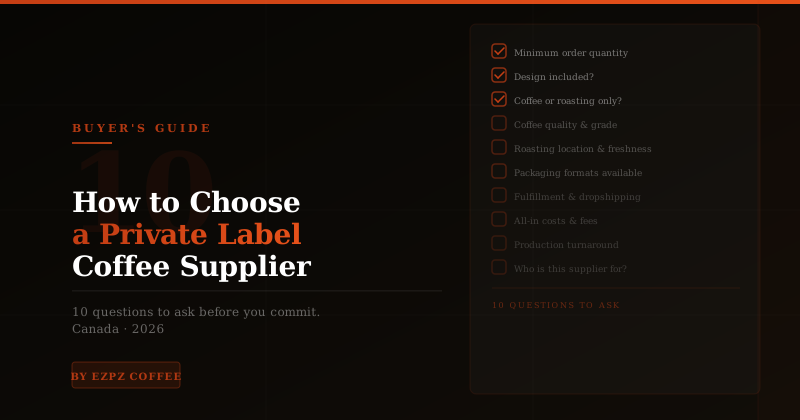
When choosing a partner, look for: specialty-grade coffee (not commodity beans), zero or low minimum orders so you can start small, included design so you don't need a separate designer, and fulfillment or dropshipping so you don't handle logistics. (This is exactly the model we built EZPZ around.)
Not sure what to look for in a supplier? Read our complete guide to choosing a private-label coffee supplier in Canada.
Step 4 — Select Your Coffee
Now the fun part — choosing the coffee that will carry your brand. Work with your partner to taste samples and select your lineup. A few tips:
- Start with a focused lineup. Three to five coffees is plenty at launch — enough variety to give customers choice without overwhelming them. A common approach is one light, one medium, and one dark roast, covering every type of drinker.
- Consider a signature blend. As you grow, a custom blend unique to your brand becomes a real differentiator.
- Think about your audience. A crowd-pleasing, smooth medium roast is often the safest anchor, since it appeals to the widest range of people.
- Always taste before you commit. Your brand lives or dies on the quality in the cup, so never choose coffee on specs alone.
Step 5 — Design Your Packaging
Your packaging is your storefront, your billboard, and your brand identity all in one. In a category as visual as coffee, great design isn't optional.
You'll typically have two options with a private-label partner: applying a custom label to a stock bag (usually zero minimum, perfect for launching), or fully custom printed bags (higher minimums, for when you're scaling). Many brands start with the label option to launch lean, then graduate to fully custom printing once they've proven demand.
Whatever route you choose, design your packaging so it reflects your brand's personality and stands out on a shelf — or in an Instagram photo.
Step 6 — Set Up Your Online Store
For most new coffee brands, Shopify is the go-to platform — it's affordable, easy to use, and built for exactly this. Set up your store, create your product pages with strong photos and descriptions, and make sure the buying experience is smooth.
If your private-label partner offers dropshipping through Shopify (via Shopify Collective, for example), you can connect your store directly to their fulfillment — so orders flow automatically and ship to your customers without you touching inventory.
Step 7 — Price for Profit
Pricing your coffee right is essential. You need to cover your cost per bag, your shipping, and still leave a healthy margin.
As a rough guide, specialty coffee brands often price retail bags at two to three times their cost per bag. So if your finished cost is around $12, a retail price of $18 to $24 is common, especially for a premium brand. Subscriptions can be priced slightly lower per bag to reward loyalty, since the recurring revenue is worth it.
Know your numbers before you launch: cost per bag, shipping, platform fees, and your target margin. This is what turns a passion project into a real business.
Step 8 — Launch and Market
With your brand, coffee, packaging, store, and pricing in place, it's time to launch. A few ways to build momentum:
- Lead with your story.People connect with the “why” behind your brand. Social media — especially Instagram and TikTok — is perfect for coffee: it's visual, shareable, and community-driven.
- Offer samples or a launch discount to get your first customers and reviews.
- Encourage subscriptions early to build recurring revenue from the start.
- Consider gifting and wholesale angles. Branded coffee makes a fantastic corporate gift or café offering — both are strong channels for new brands.
Start lean, learn from real customer feedback, and scale what works.
The Modern Way to Start a Coffee Brand
Here's the bottom line: starting a coffee brand in Canada has never been more accessible. With a private-label partner handling the sourcing, roasting, packaging, and even fulfillment, you can launch a professional, specialty-grade coffee brand with no roasting, no inventory, no minimums, and very little upfront risk.
You bring the vision, the brand, and the customers. The right partner handles everything else. That's exactly what we do at EZPZ — we help people turn a coffee brand idea into a real, sellable product, from a single bag to a national lineup.
If you've got an idea for a coffee brand, there's never been a better time to make it real.